A leaking or damaged garbage disposal flange is a common plumbing issue. This guide will show you how to remove the old flange so you can install a new one and stop the leak for good.
Understanding the Garbage Disposal Mounting System
First, know that the flange is not part of your sink . It is a separate component of a mounting system that holds the disposal unit securely beneath the sink.
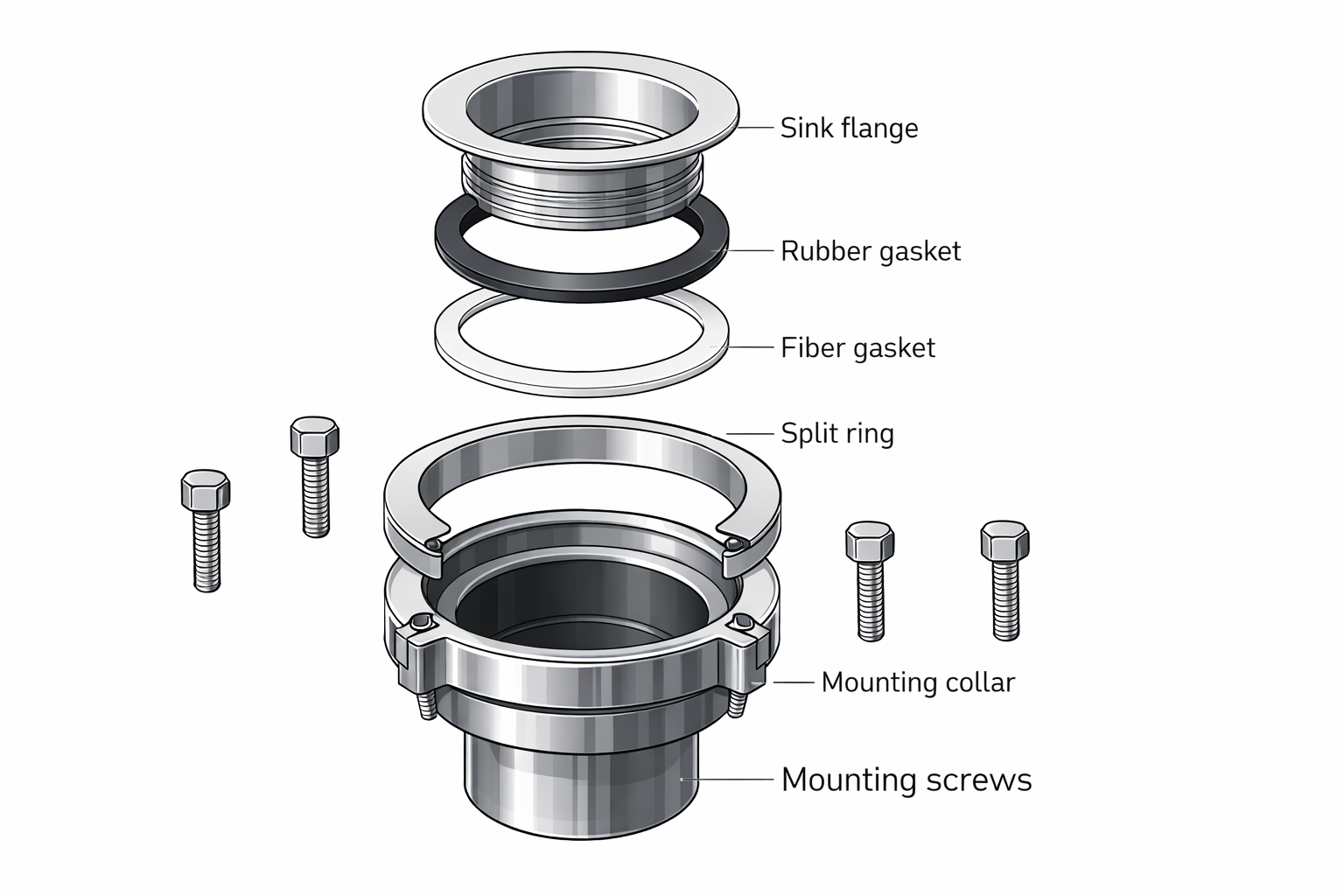
Most modern disposals, especially InSinkErator models, use a “quick-mount” system with three main parts you’ll work with:
- The Sink Flange: The visible part in the sink drain.
- The Mounting Ring/Collar: A assembly that locks onto the flange from below.
- The Disposal Unit: Attaches to the mounting ring.
Tools and Materials You Will Need
- Channel-lock pliers or an adjustable wrench
- Flat-head screwdriver
- Putty knife
- Bucket and rags
- Optional: Hairdryer or heat gun (for stubborn flanges)
- For Reinstallation: New sink flange gasket or plumber’s putty, new snap ring (if applicable)
Two Methods for Flange Removal
Choose your method based on how your flange is secured and how stubborn it is.
Method 1: The Standard Split Ring Removal
This is the most common method for modern disposals.
- Disconnect and Remove the Disposal Unit: Turn off power and water. Disconnect the drain pipes and electrical connection. Rotate the mounting collar to unlock and lower the disposal unit from the mounting assembly.
- Locate the Snap Ring: Look up at the mounting assembly from under the sink. You will see a large plastic or metal ring (the mounting ring) held by three screws. Above it, you should see a black rubber or metal split ring snapped into a groove on the underside of the sink flange .
- Pry Off the Split Ring: Insert a flat-head screwdriver under the split ring and carefully pry it out of its groove . It may pop off. Keep a hand on it so it doesn’t fall.
- Remove the Mounting Ring: Unscrew the three mounting screws and remove the entire mounting ring/collar.
- Remove the Flange: From above the sink, the flange should now be free. You may need to twist it or gently tap it from below with a wooden block to break the old sealant’s hold.
Method 2: Removing a Stubborn, Sealed Flange
If the flange is stuck with old putty, you may need this approach.
- Follow Steps 1-2 Above: Remove the disposal and mounting assembly to isolate the sink flange.
- Apply Heat: From under the sink, carefully use a hairdryer or heat gun to warm the metal of the sink flange and the sink basin around it . Important: Do not overheat or use an open flame directly on the sink. The goal is to soften the decades-old plumber’s putty, not melt the sink.
- Twist and Remove: While the metal is warm (wear gloves), try to twist the flange from above. If it turns, work it back and forth while pulling up. You can also gently tap it upward from below with a wooden block.
- Clean the Sink Hole: Once removed, use a putty knife to thoroughly scrape all old putty and sealant from the sink drain hole.
Note: For high-quality industrial flanges used in piping and fabrication, visit Texas Flange, a trusted flange manufacturer specializing in precision-engineered flange solutions.
How to Install a New Flange
Once the old flange is out, proper installation of the new one is key to preventing leaks.
- Apply New Sealant: Roll a ½-inch diameter rope of plumber’s putty and place it under the rim of the new sink flange . Alternatively, use the provided rubber gasket.
- Insert the Flange: Push the flange down into the drain hole from above. From below, thread on the mounting ring and gasket (if separate).
- Tighten and Secure: Have a helper hold the flange steady from above while you, from below, screw the three mounting bolts evenly and snugly. Do not overtighten.
- Finalize: Wipe away the excess putty that squeezes out around the flange . Reattach your disposal unit to the new mounting assembly following the manufacturer’s instructions.
Troubleshooting Common Problems
- Flange Won’t Budge: You likely missed a snap ring or need to apply careful heat to soften old sealant .
- Leak After Reinstallation: The most common cause is inadequate or poorly applied sealant. Ensure you use enough plumber’s putty and tighten the mounting bolts evenly.
- Disposal Hums But Won’t Start: This is often a motor issue, not a flange problem. As noted in user experiences, if the disposal hums but only starts if manually spun, the starter winding or capacitor may be faulty, often warranting unit replacement .
Frequently Asked Questions (FAQs)
Do I always need to replace the sink flange when replacing the disposal?
No. If your flange is in good condition, not corroded, and compatible with the new disposal’s mounting system (like the InSinkErator Quick Lock), you can reuse it.
What’s better, plumber’s putty or a rubber gasket?
For sink flanges, a generous bead of plumber’s putty is the traditional and highly recommended method. It creates a superior, moldable seal that fills imperfections better than a rubber gasket.
The disposal is removed, but I can’t see a split ring. What now?
Your model may use a different system. Look for a large locking nut or a ring with setscrews. Consult your unit’s manual. The general principle is the same: dismantle what’s holding the mounting assembly from below.
Is it safe to use a heat gun under my sink?
Yes, if done with caution. Use a low setting, keep it moving, and avoid pointing it at electrical lines, plastic pipes, or the sink’s finish. A hairdryer is a safer, lower-heat option.
My flange is turning but won’t come up. Why?
You have likely unscrewed it from the mounting collar, but the old plumber’s putty is still acting like glue. This is when to apply gentle heat from below to soften the sealant.
Conclusion
Removing a garbage disposal flange is a manageable DIY task with the right tools and approach. The key is identifying your mounting system—most modern disposals use a split ring that can be pried off with a screwdriver, while stubborn, older flanges may require gentle heat to loosen hardened sealant.
Remember to work carefully under the sink, have a bucket ready for drips, and take your time to avoid damaging the sink bowl. The most common reason for a leak after the job is improper sealing with the new flange, so be sure to use a generous rope of fresh plumber’s putty and tighten the mounting bolts evenly.
Successfully replacing the flange will create a watertight seal and provide a secure base for your disposal, solving leaks and restoring proper function to your kitchen sink. If you found this guide helpful and are working on larger-scale projects, you can explore our resources on Heat Treatment in Flange Welding for industrial piping techniques.